
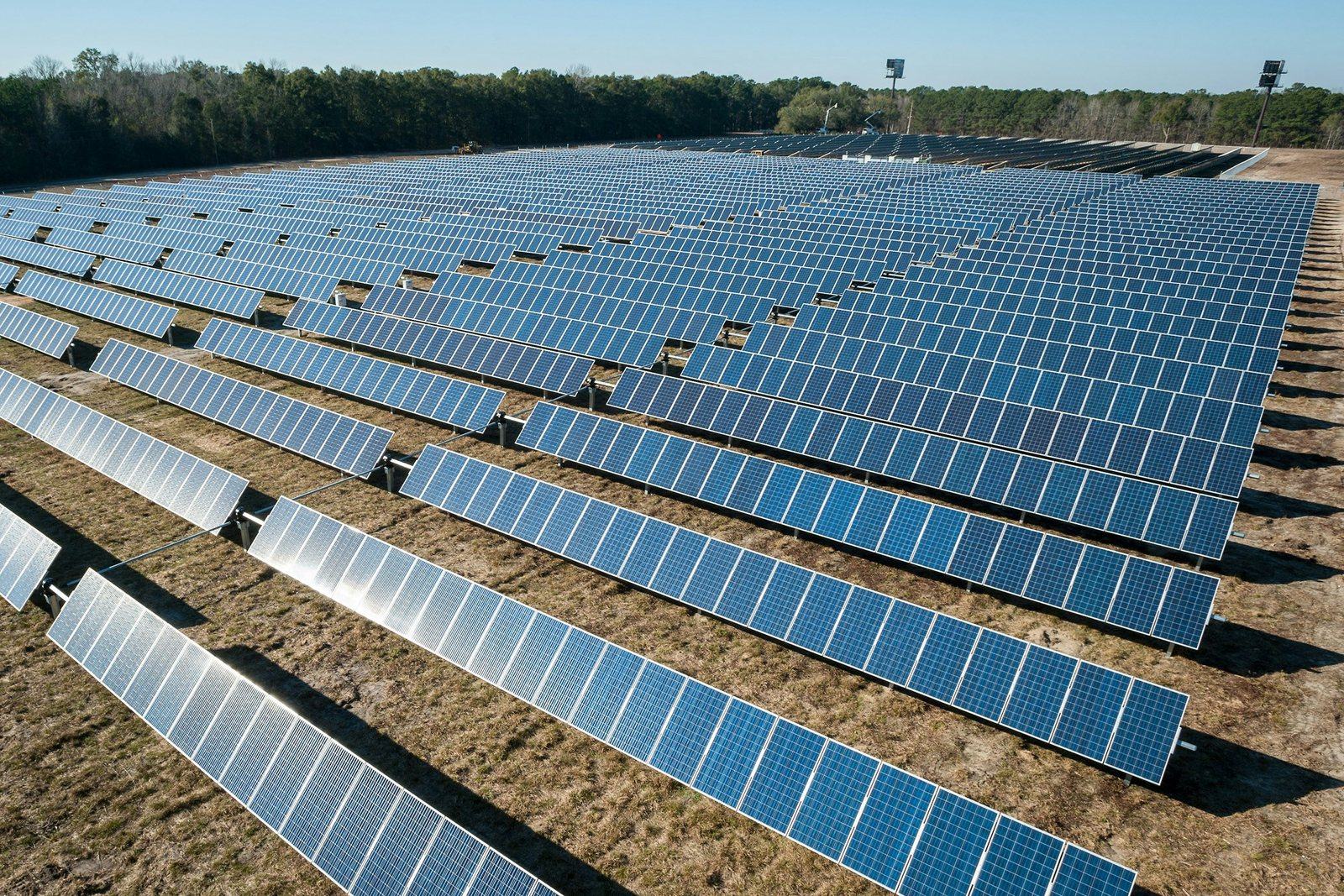
Hundreds of acres, and the cans keep up.
Containers staged where this week’s block is, metal kept separate, and a landfill ticket behind every load for the closeout file.
What a solar site gets
A solar build throws away volume, not weight — and the service has to match.
Pallets, crating and cardboard off panel deliveries fill a container long before it gets heavy, while racking offcuts and wire want a can of their own. We set it up that way from the first delivery rather than discovering it in month three.
Cans that move with the blocks
A solar build doesn't stay in one place — it works across the site in sections. Containers get staged where the crews are that week and moved on as the work does, instead of making everyone drive spoil to a gate.
- Staged by block
- Moved as work moves
- Open-ended pickups
Most of it is packaging
Panel deliveries arrive on pallets, in crating and wrapped in cardboard, and that is the bulk of what a solar site throws away. It is light and enormous, which is a volume problem rather than a weight one — so the right answer is more 40s, not heavier loads.
- 40 yard roll-offs
- Pallets & crating
- Cardboard volume
Racking, conduit and wire in their own can
Metal leaves as metal. A separate container for racking offcuts, conduit and wire spools keeps it out of the landfill tonnage and keeps your waste figures defensible.
- Metal-only containers
- Keeps tonnage honest
A scale ticket for every load
Each haul comes back with the landfill's own ticket — weight, ticket number, yard — and a photo of it. Your team pulls a month as one download, photos plus a spreadsheet, for the closeout file or a diversion report.
- Photo of every ticket
- One-press monthly export
- Closeout-ready
Billing an EPC's office will accept
PO numbers on every line, Net-30 terms, and one consolidated invoice a month. Site supervisors can order and track containers from the portal without ever seeing a price; the office sees the money.
- Net-30
- PO on every line
- One monthly invoice
Out past the last paved road
Solar sites are rarely convenient. S&P runs Bell, McLennan and Coryell counties from Temple, so a site on a caliche road an hour out is a normal day rather than a mobilisation charge.
- Temple, TX
- Bell · McLennan · Coryell
On the site, not in a brochure
Separation
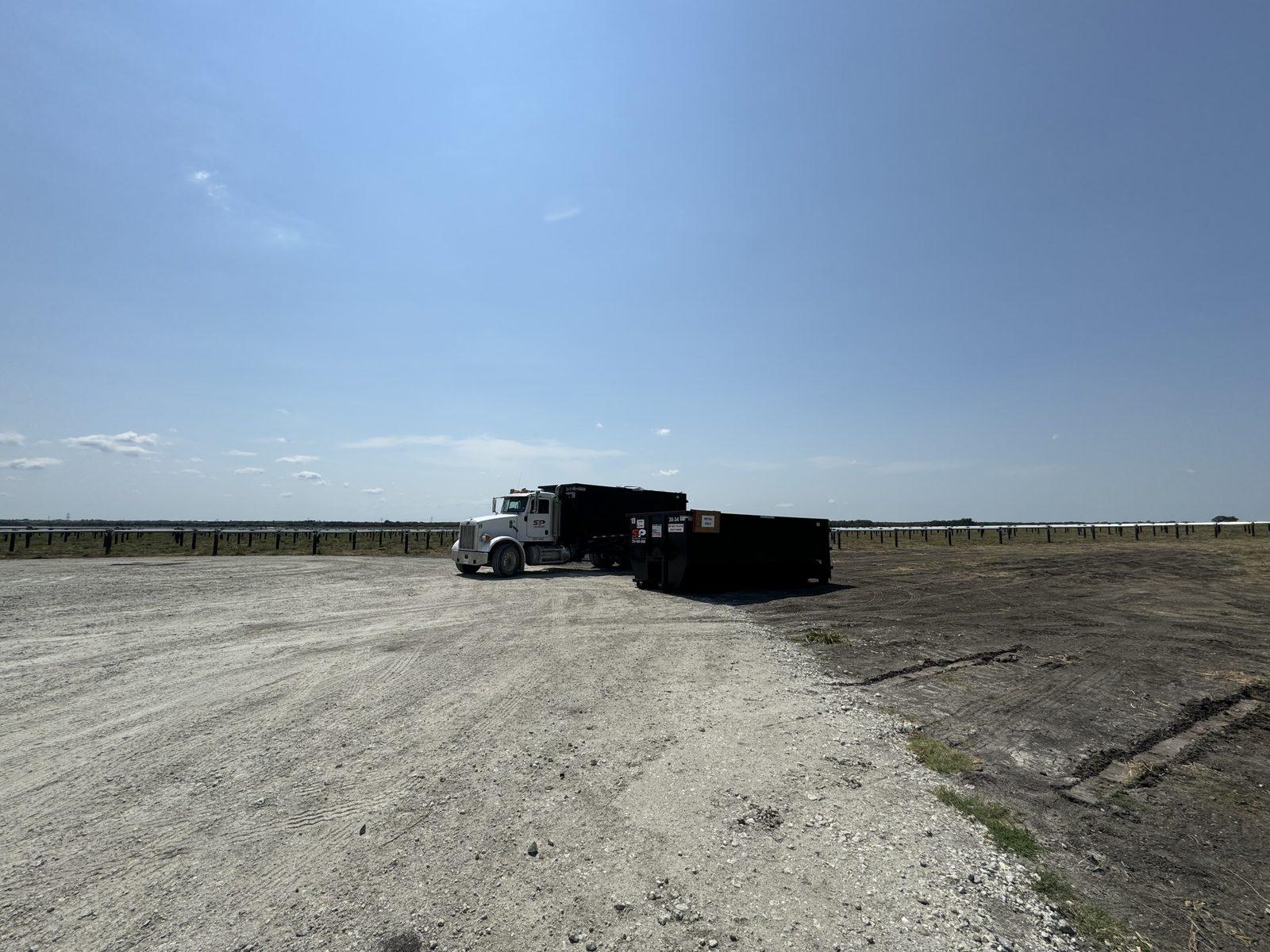
Metal leaves as metal.
That is one of ours on a Central Texas solar site — a container marked for metal only, sitting beside the 30 yard that takes everything else. Racking offcuts, torque tube ends, conduit and wire go in their own can from the first delivery, not once somebody notices the tonnage.
It matters at closeout. Metal that crosses a landfill scale is weight you paid to bury and cannot claim as diverted. Metal that leaves as metal is a line you can defend in a waste report, and the container is marked so the crew doesn't have to be told twice.
- Metal-only containers
- Marked on site
- Diversion you can report
Staging
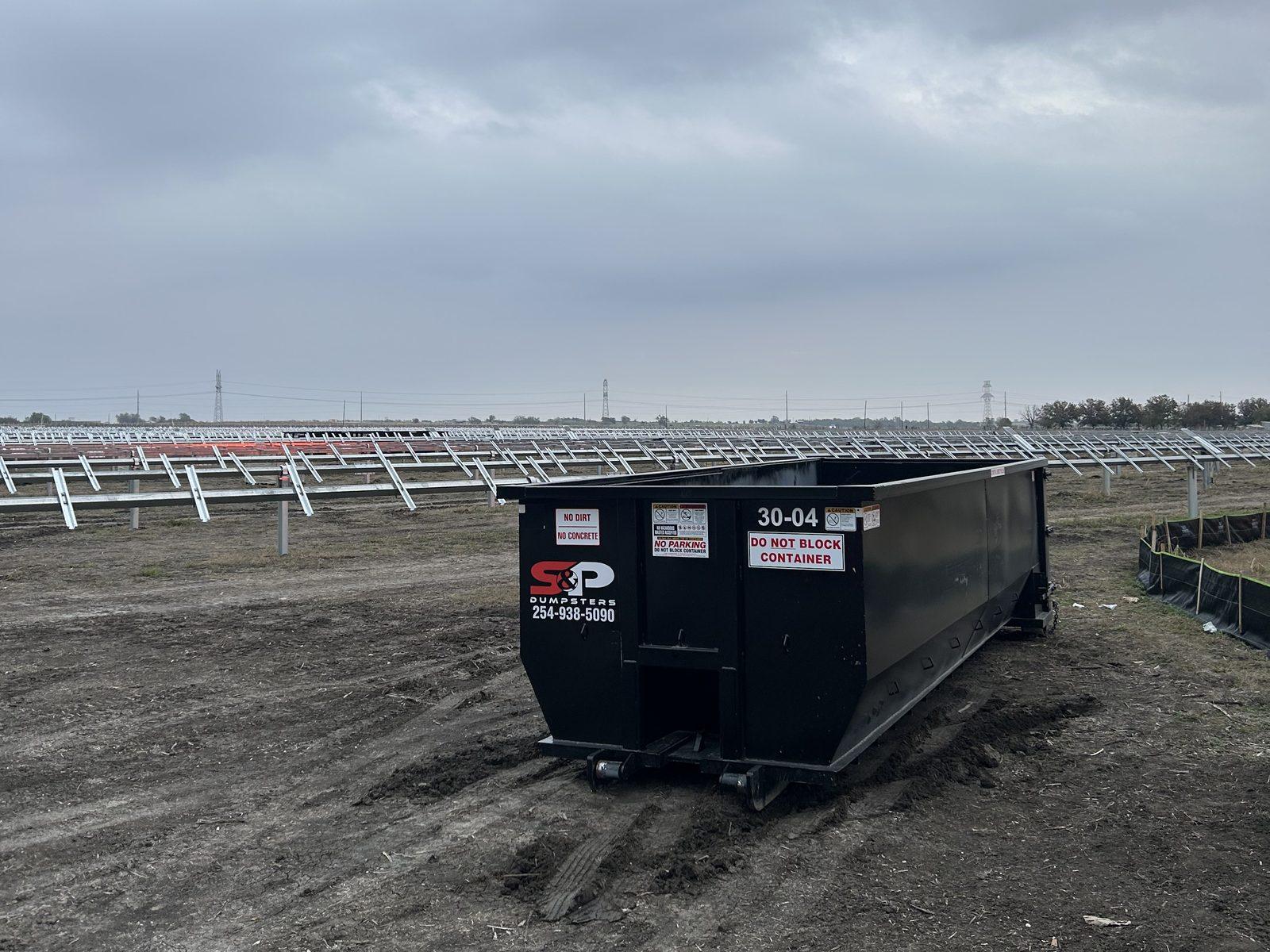
Cans sit where this week's block is.
A solar build walks across the site, and the laydown yard it started from stops being convenient by about the third block. So the containers move with it — staged on the pad the crew is actually working, on ground a loaded roll-off truck can get back out of.
That is a routing question as much as a container one. These sites are usually past the last paved road, on caliche that turns after rain, and a truck that cannot turn around is a truck that cannot collect. We look at the access before the first drop rather than finding out with a full can.
- Moved as blocks progress
- Caliche and laydown access
- Open-ended pickups
Sizes we stage on solar sites
Delivery, pickup and 7 rental days included. Pay in full or split into 4 with Klarna at checkout.
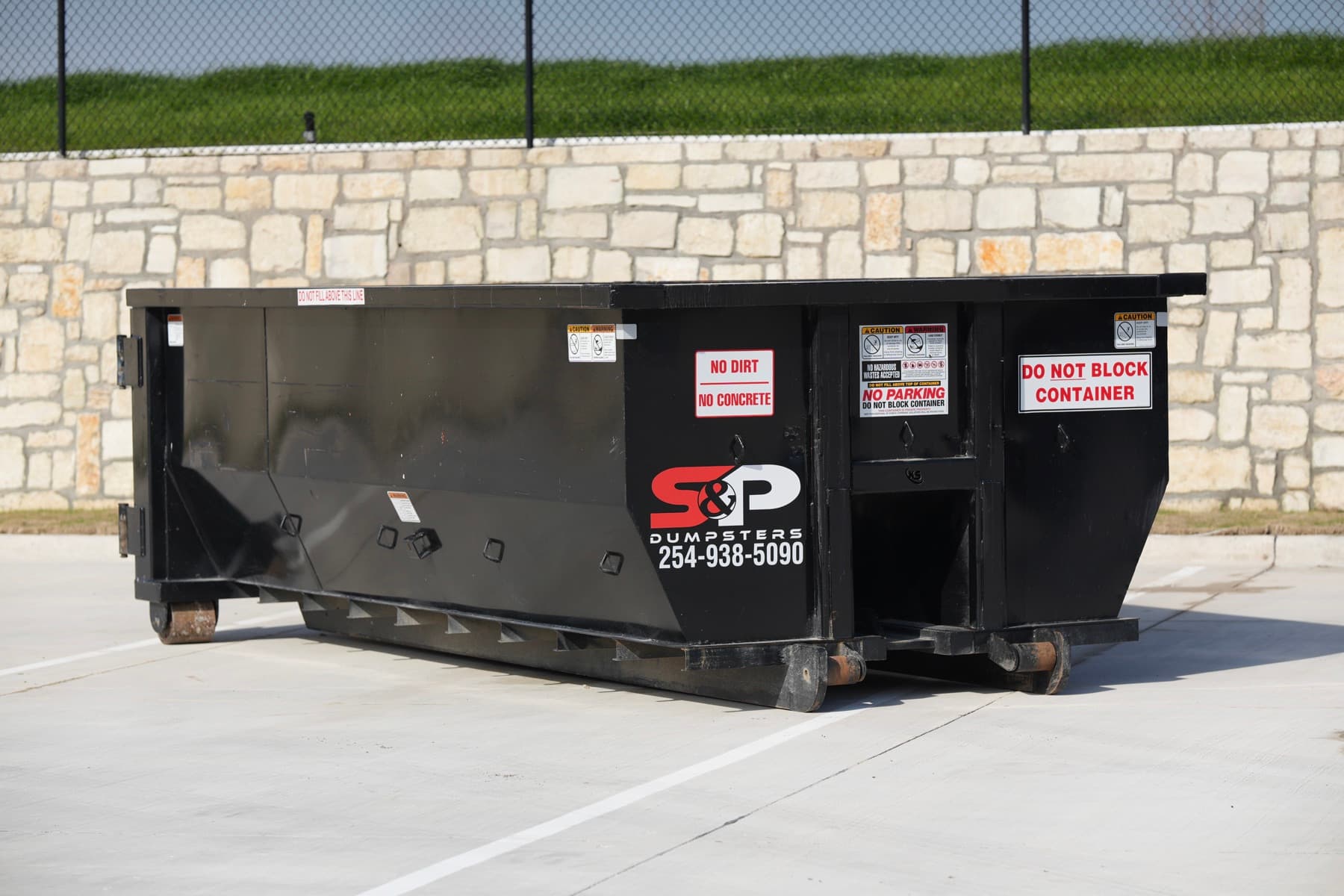
15yard
Garage cleanouts, small remodels and yard waste.
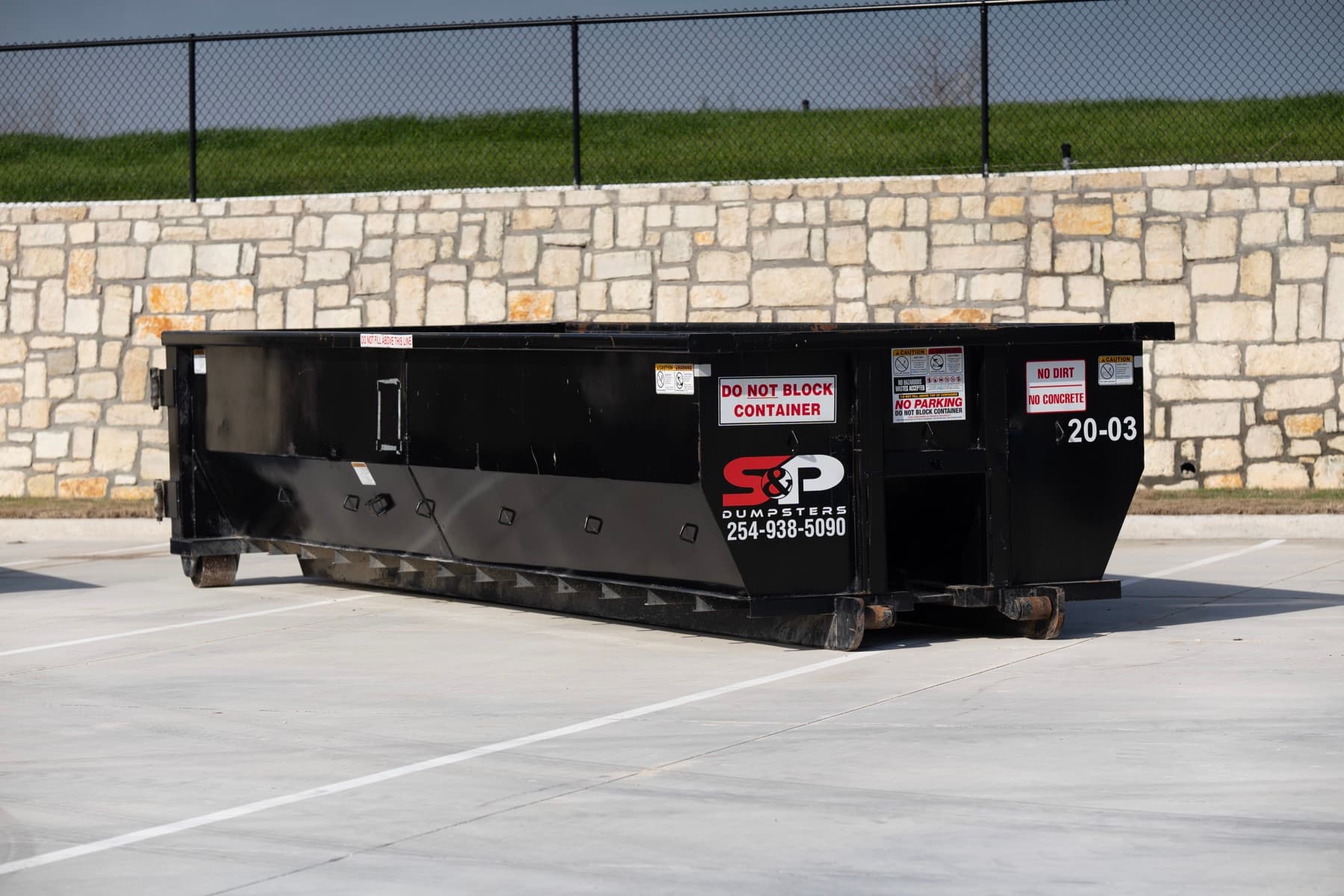
20yard
Roofing, flooring and medium renovations.
 Most popular
30yard
Major home improvements and whole-home cleanouts.
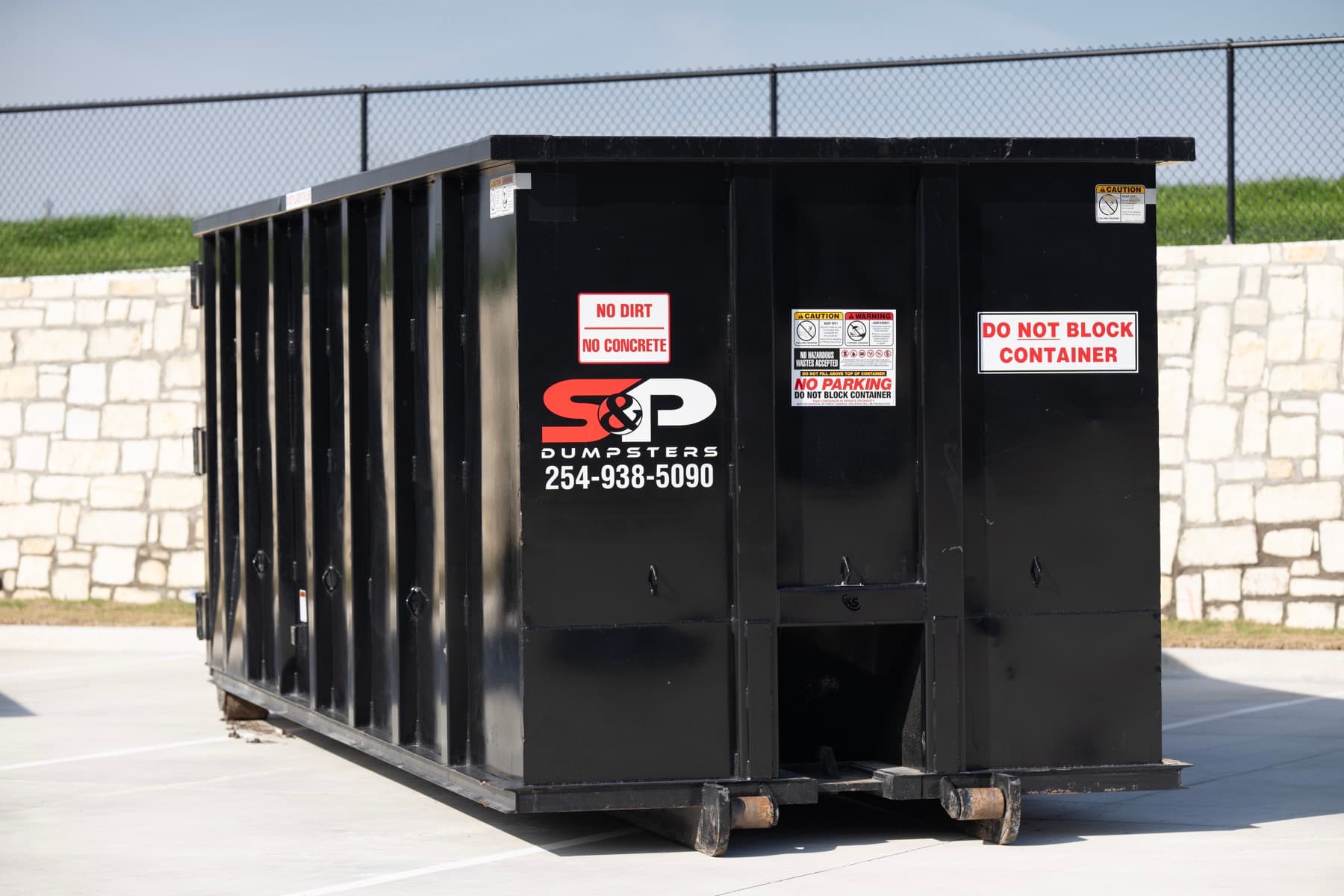
40yard
Construction, demolition and large commercial jobs.
Running a high-volume job? Ask about contractor pricing.
Projects with 20 or more swap-outs get volume rates, Net-30 terms and one consolidated invoice a month — with a portal your foreman can request swaps from.