
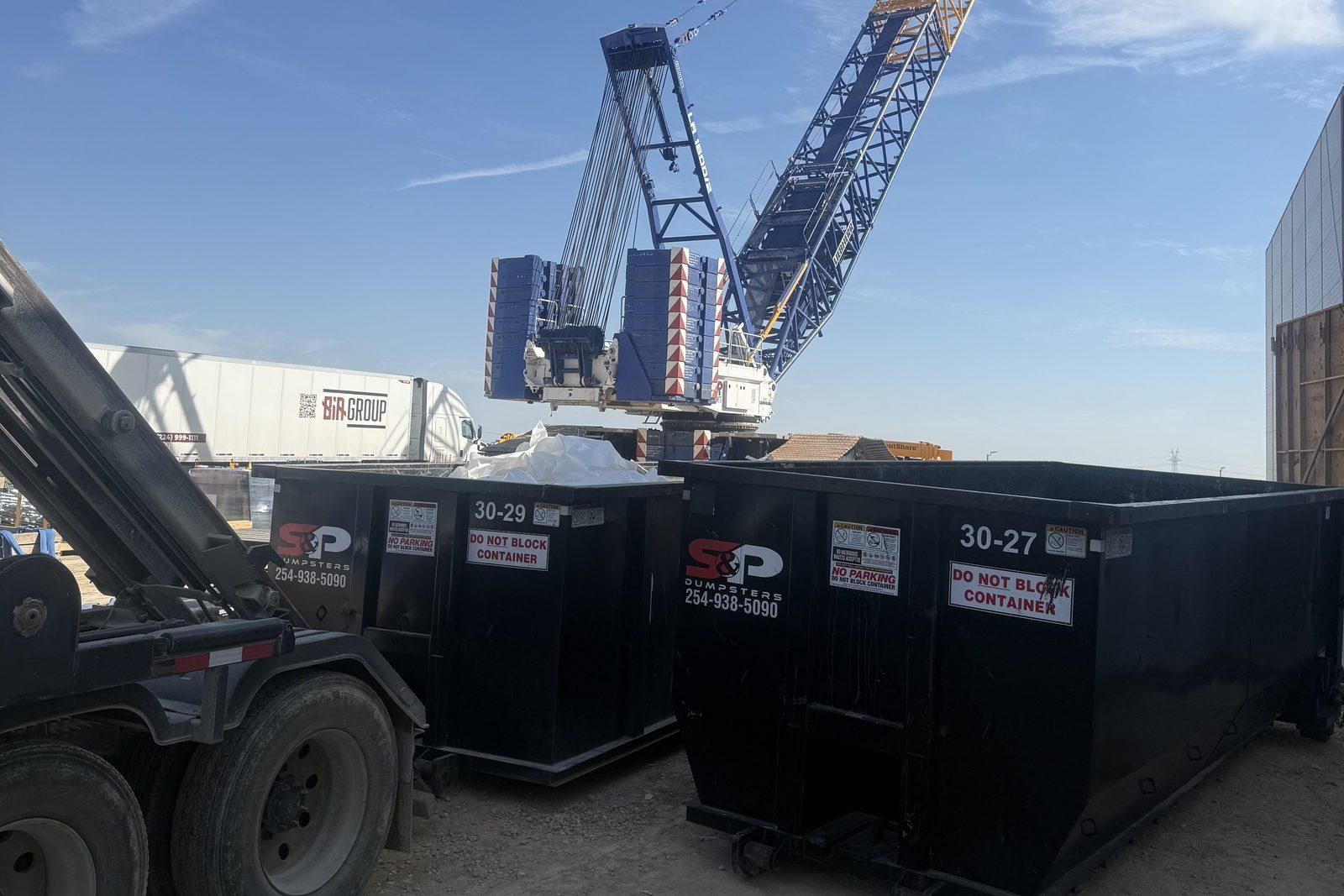
Built for the pace of a data center build.
Cans where the work is, swapped when they’re full, with a landfill ticket behind every load and one invoice at the end of the month.
What a data center site gets
The volume is the easy part. The paperwork is what people change vendors over.
A hyperscale build makes more waste in a week than most jobs make in a year, and it also makes more documentation. We handle both the same way: cans that keep up, and a record of every single load that leaves.
Volume, and a swap when it's full
Several 30 and 40 yard cans staged where the work is, swapped on request from the portal or a text. Your superintendent asks; nobody has to find a phone number or wait for an office to open.
- 30 & 40 yard roll-offs
- Swap-outs on request
- Open-ended pickups
Separated at the pad, not at the gate
Metal in its own can so it leaves as metal. Clean fill and concrete go to a crusher or a pit at a flat rate instead of crossing a landfill scale, which keeps both the cost and the tonnage honest.
- Metal-only containers
- Concrete & clean fill
- Flat-rate dumps
A scale ticket for every load
Each haul comes back with the landfill's own ticket — weight, ticket number, yard — and the photo of it. Your team can pull a month of them as one download, photos plus a spreadsheet, straight from the portal.
- Photo of every ticket
- One-press monthly export
- Weight matched to invoice
Billing that survives procurement
A PO number on every line, Net-30 terms, and one consolidated invoice a month instead of forty. Site contacts can order and track cans without seeing a price; billing sees the money.
- Net-30
- PO on every line
- One monthly invoice
Compactors when the volume earns one
Past a certain point a compactor beats a row of open cans. We haul compactors at a flat trip rate plus tonnage, so the economics are easy to compare against swapping.
- Compactor hauling
- Flat trip rate + tonnage
Local, so mobilising isn't a line item
S&P is based in Temple and runs Bell, McLennan and Coryell counties. Nobody is driving in from another market to serve your site, which is what makes next-day and same-day swaps realistic.
- Temple, TX
- Bell · McLennan · Coryell
On the job, not in a brochure
From the first phase
We're there before anything is vertical
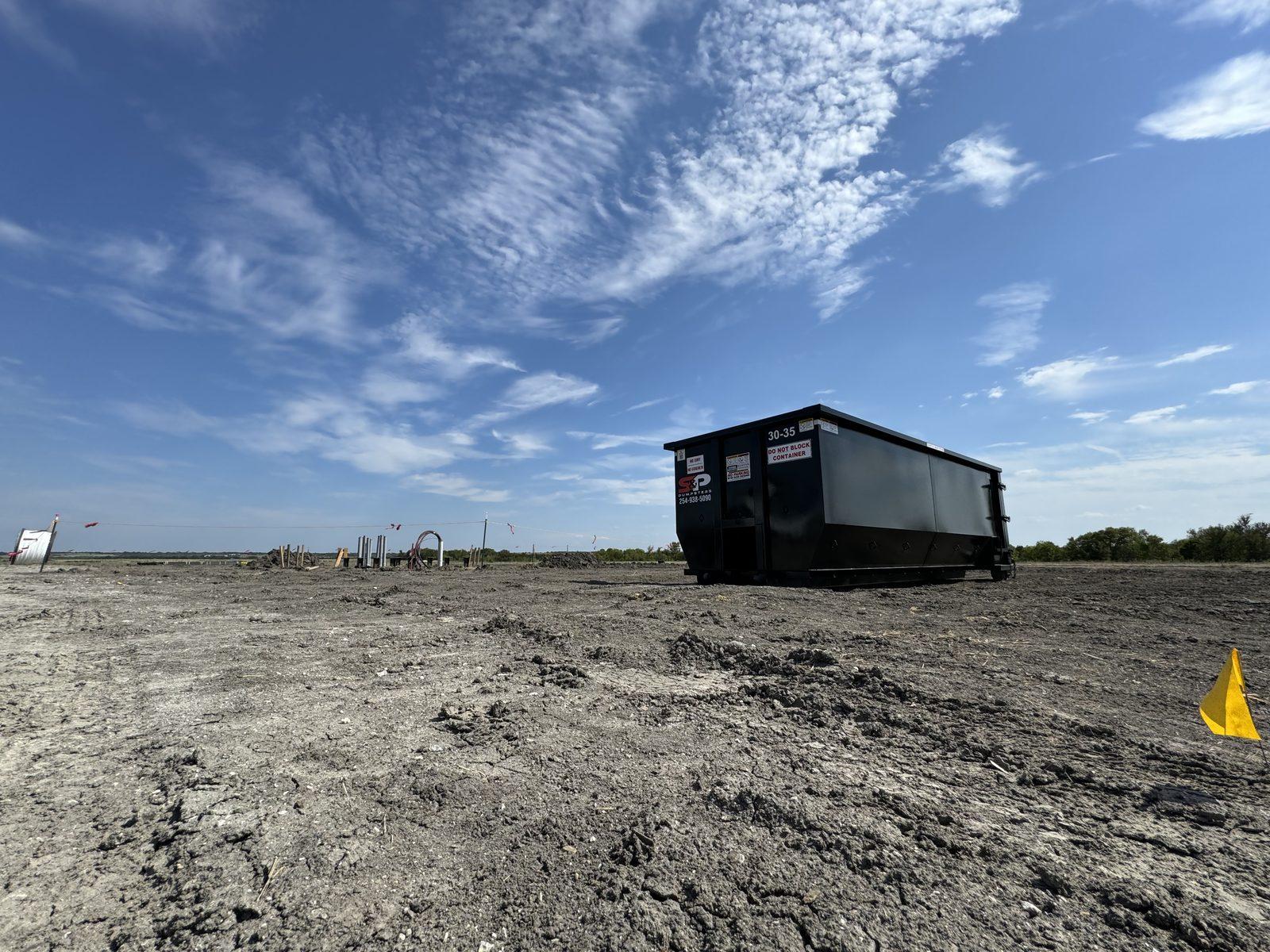
Earthworks and pad prep throw off waste before there is a building to put a container beside: stripped vegetation, broken forms, banding, packaging off the first deliveries. That is this photo — a 30 on graded ground with survey flags and pier caps still the tallest things on site.
Working at that stage is mostly about access. There is no hardstanding yet, the haul road is whatever the dirt contractor left, and a loaded roll-off needs somewhere it can turn and climb out of. We would rather look at the route in before the first drop than send a truck that reaches the can and cannot leave with it.
- Pad prep and earthworks
- Cans on raw ground
- Haul-road access checked first
- Open-ended pickups
Separation
The metal can is marked, on the pad, from the start
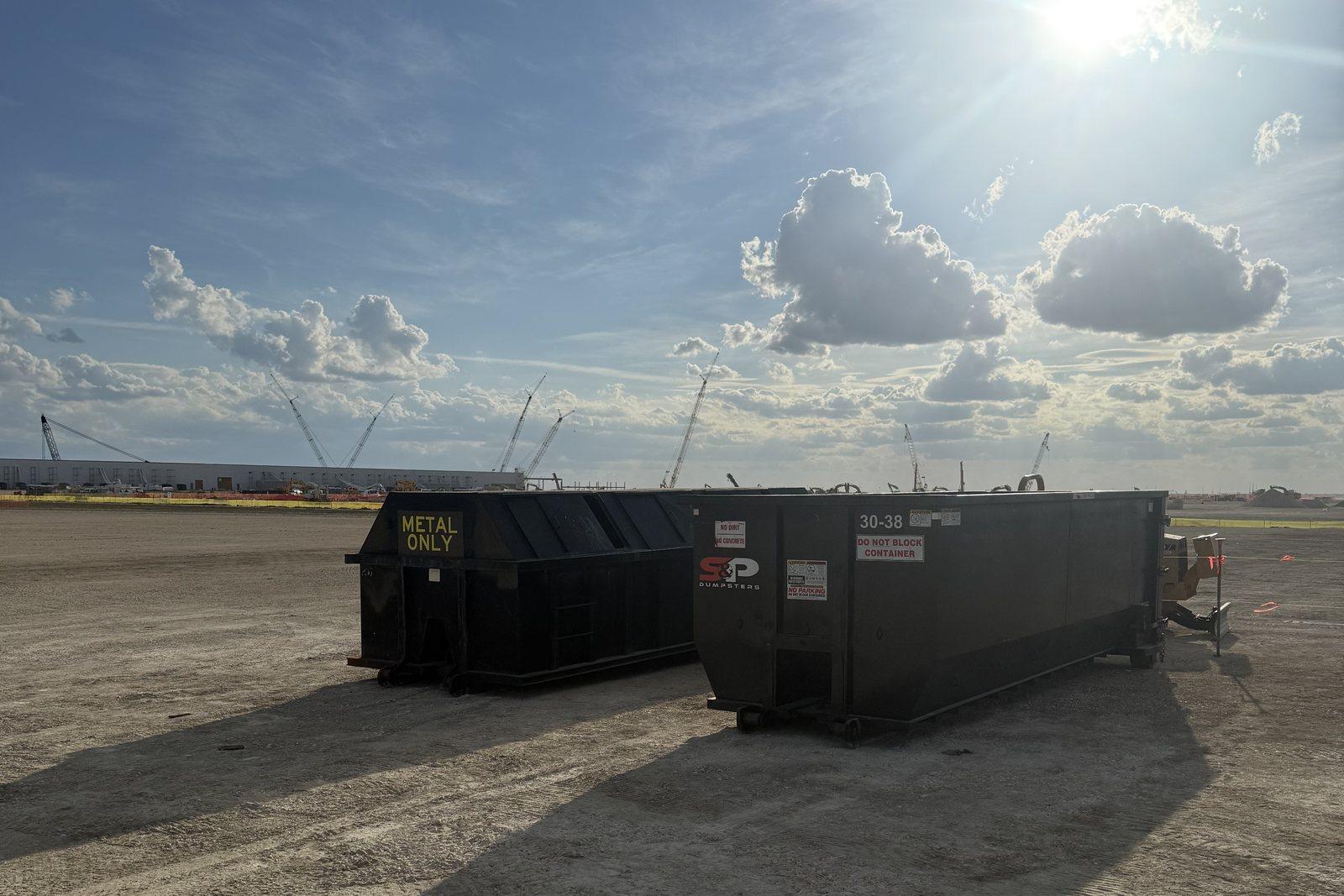
This is the one that matters at closeout, and it is a photograph of this kind of job rather than a claim about it: a container marked for metal only, standing beside the 30 that takes everything else, with the cranes across the horizon for scale.
Conduit, strut, duct offcuts and banding go in the marked can from the first delivery. Metal that crosses a landfill scale is weight you paid to bury and cannot report as diverted; metal that leaves as metal is a line in a waste report you can defend. Every haul of either comes back with the landfill's own ticket and a photo of it, and your team can pull a month of them as one download rather than emailing us for copies.
- Metal-only containers
- Marked on the pad
- Scale ticket with a photo
- One-press monthly export
Sizes we stage on data center sites
Delivery, pickup and 7 rental days included. Pay in full or split into 4 with Klarna at checkout.
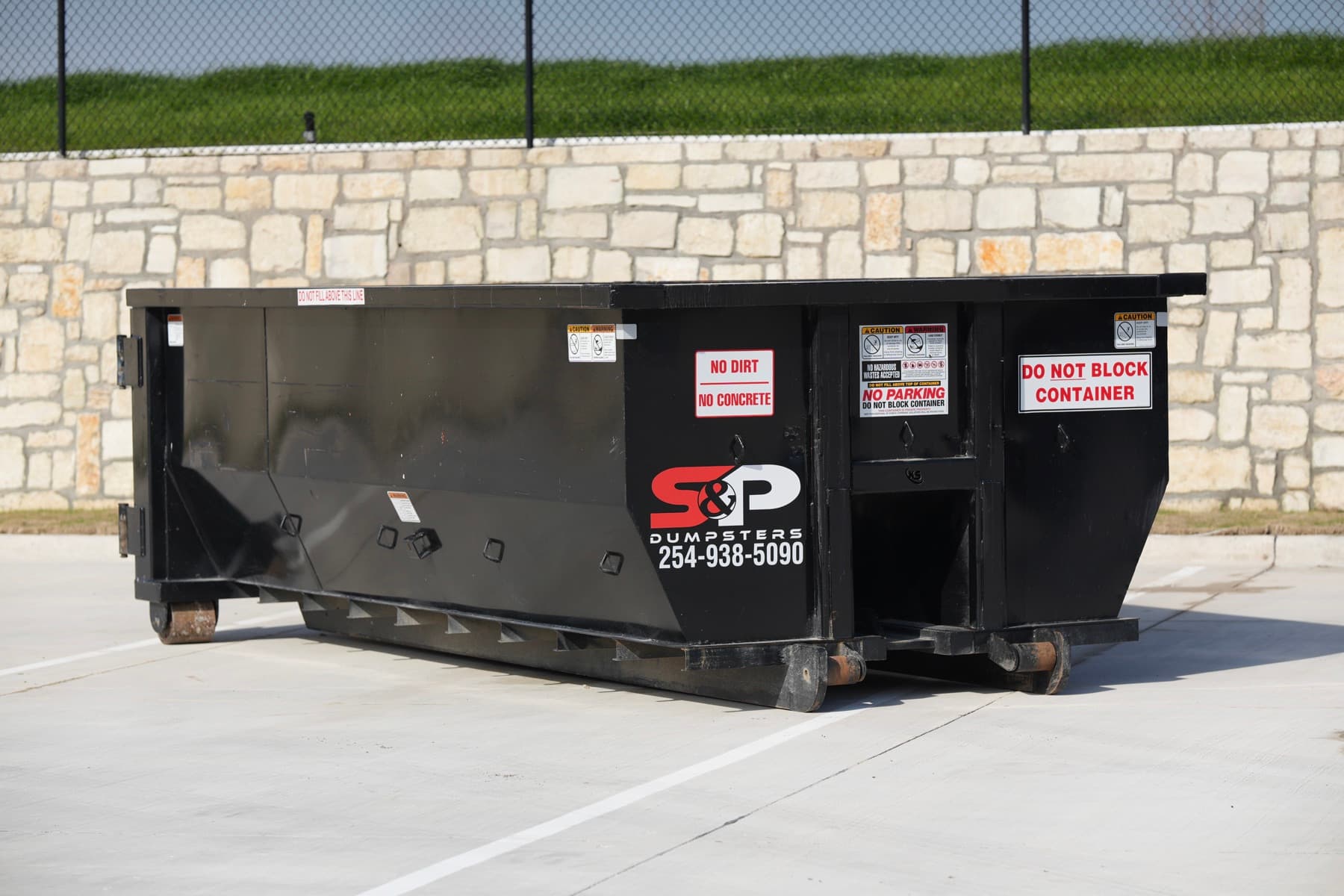
15yard
Garage cleanouts, small remodels and yard waste.
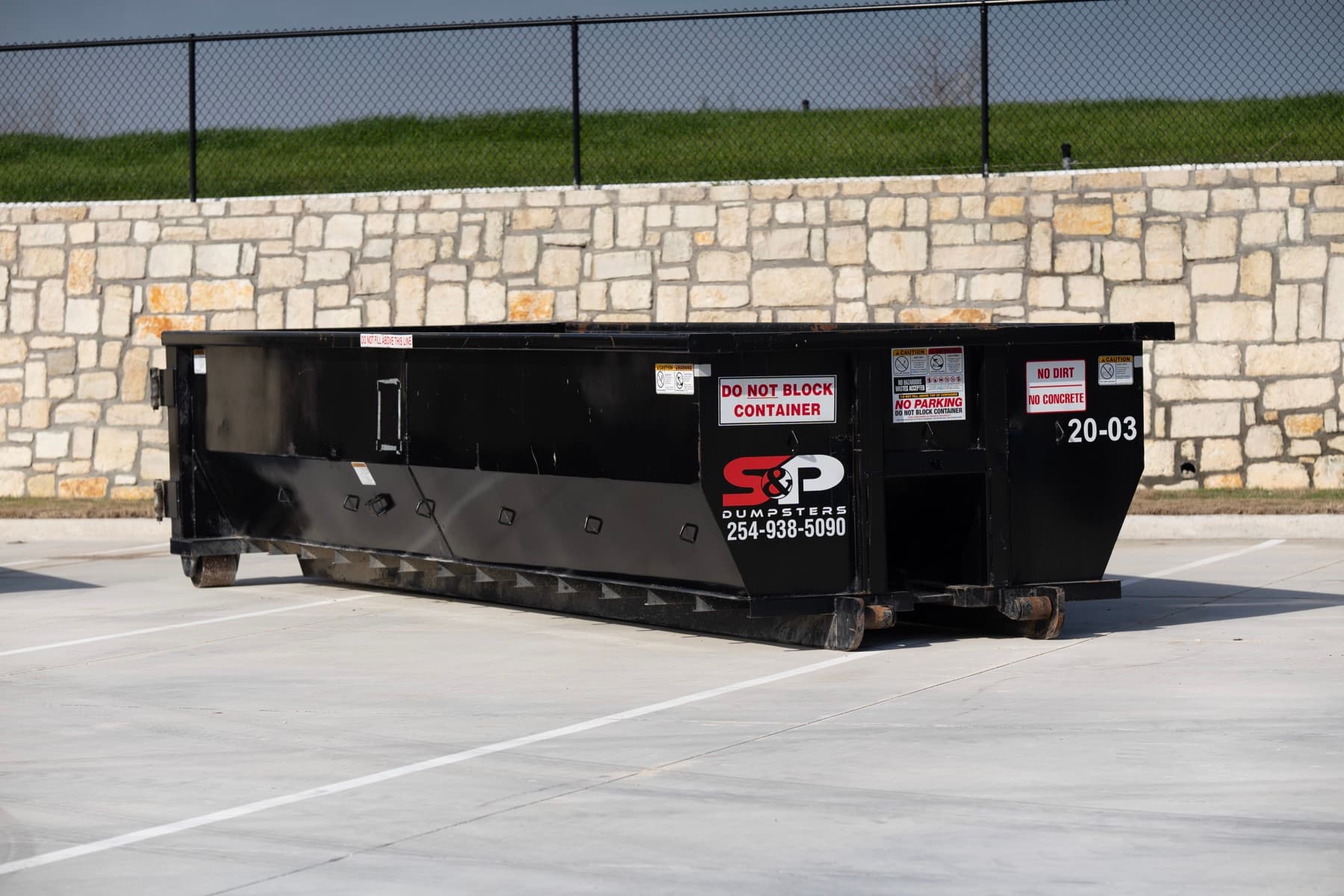
20yard
Roofing, flooring and medium renovations.
 Most popular
30yard
Major home improvements and whole-home cleanouts.
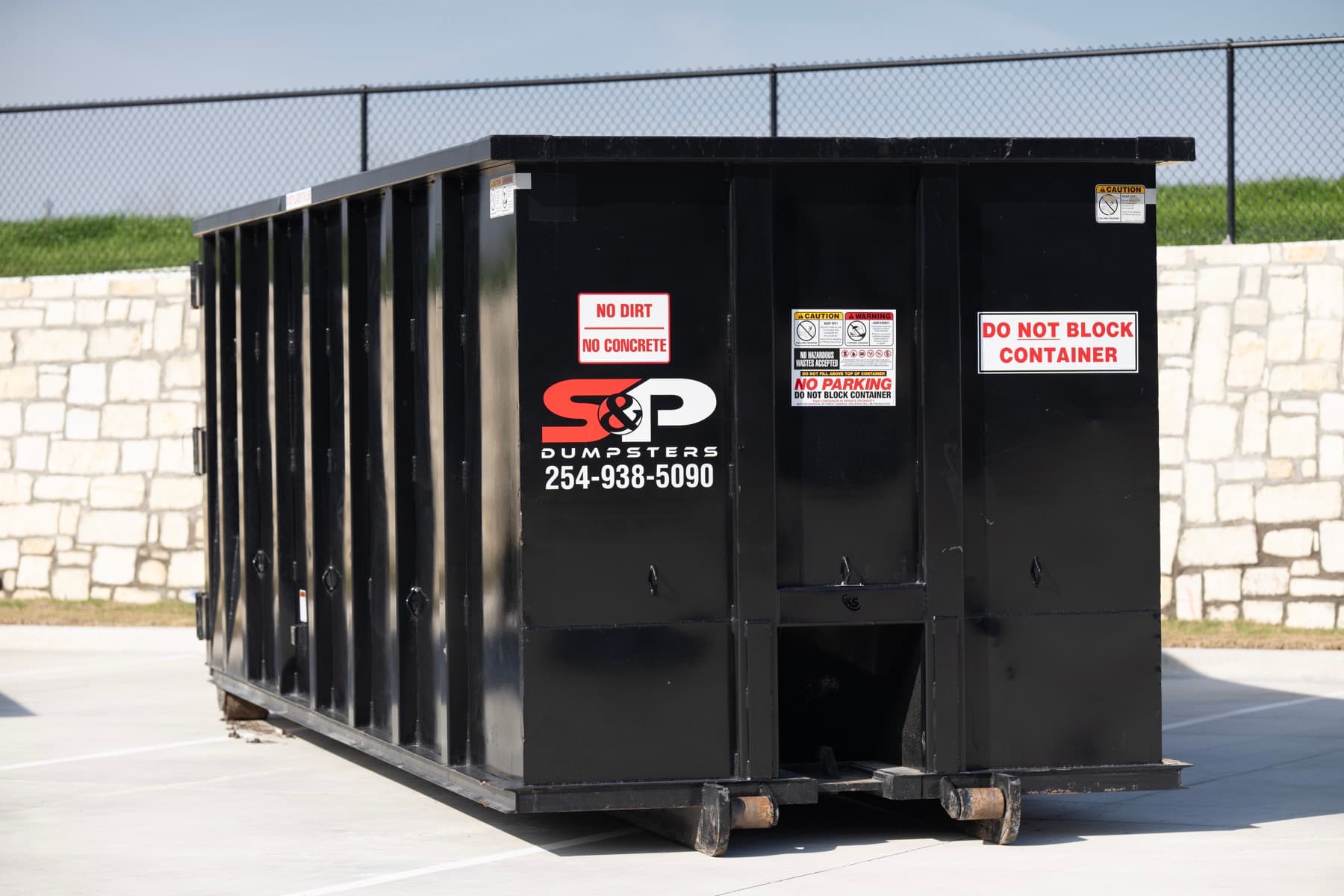
40yard
Construction, demolition and large commercial jobs.
Running a high-volume job? Ask about contractor pricing.
Projects with 20 or more swap-outs get volume rates, Net-30 terms and one consolidated invoice a month — with a portal your foreman can request swaps from.